A bridge between the skeleton and the surface
A skeleton explains proportion, leverage, and where joints can move. The living surface shows the final visible form. The écorché connects them by showing the muscles that span the bones and create the masses beneath the skin.
For artists, that bridge is especially valuable around the shoulder, hip, knee, and torso, where several forms overlap and change direction together.
Study masses before individual labels
Treat the figure as a set of large interlocking volumes before memorizing every name. Compare the wedge of the rib cage, the tilt of the pelvis, the cap of the deltoid, and the broad directional groups of the limbs. Labels become useful after you can locate the form in three dimensions.
- Find the bony landmarks that remain visible in most bodies.
- Trace each major muscle group from origin to insertion.
- Compare the same structure from front, side, and back.
Why a poseable écorché is different
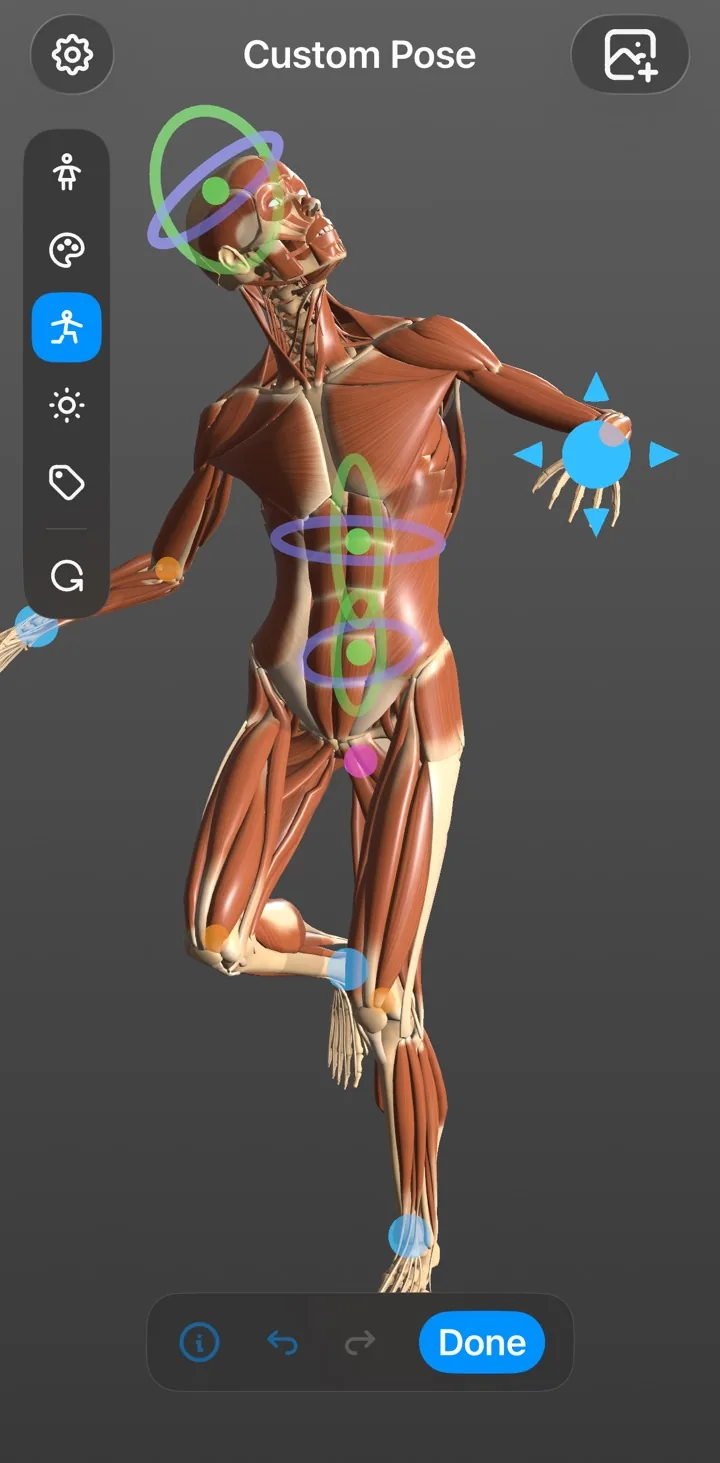
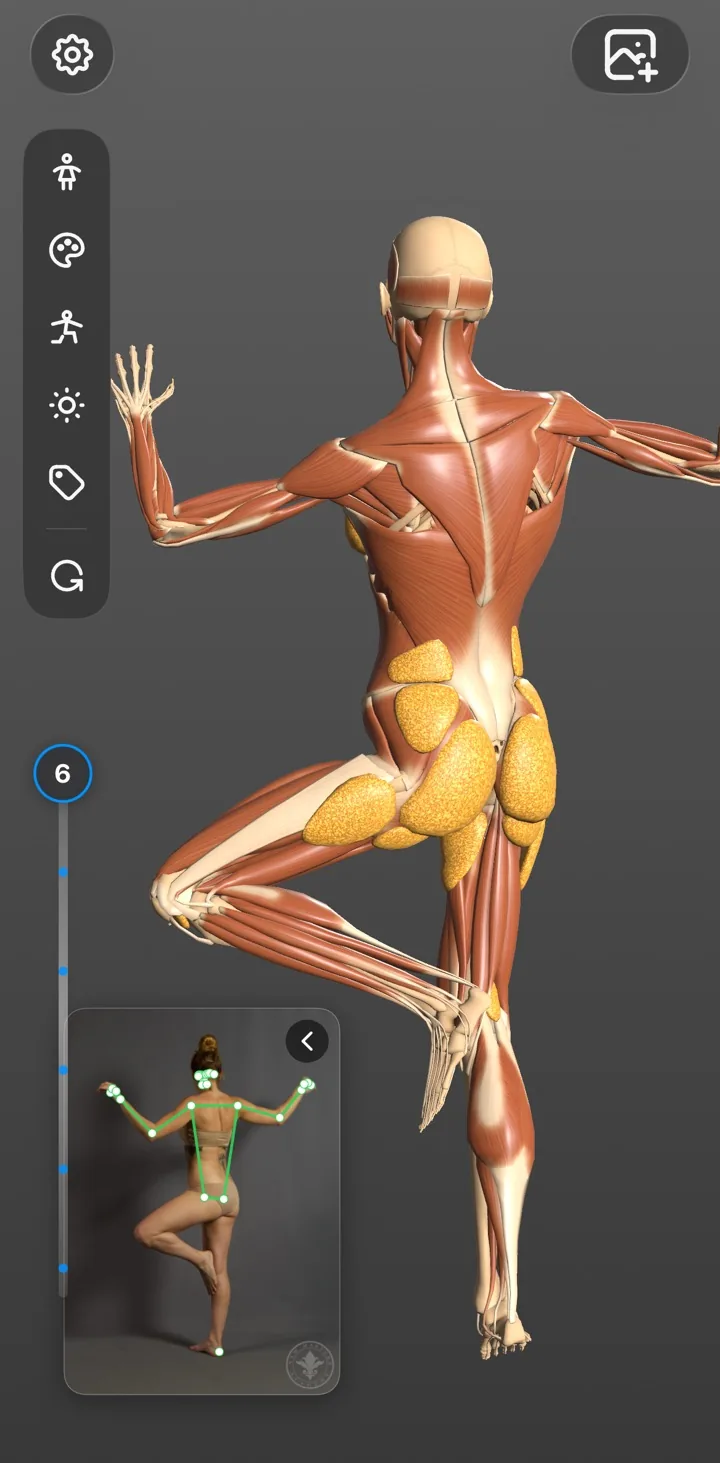
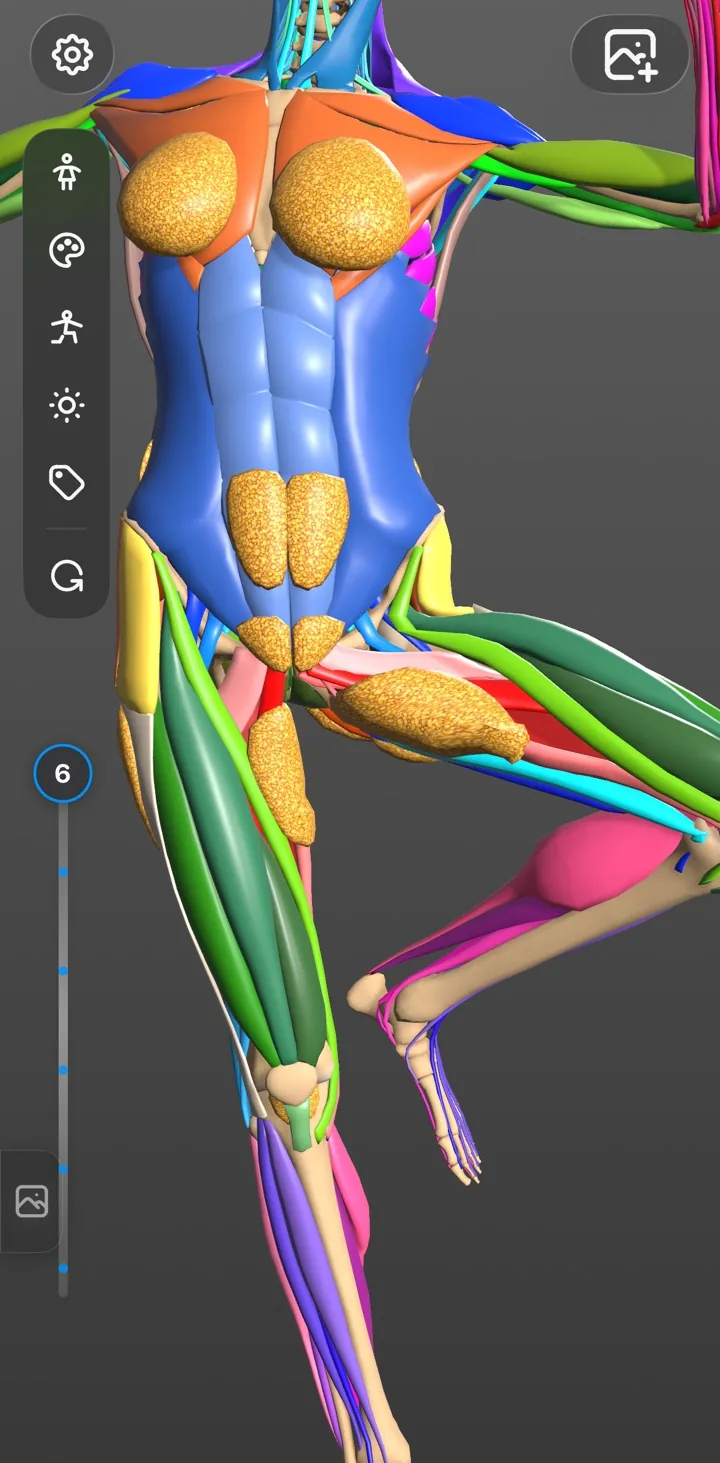
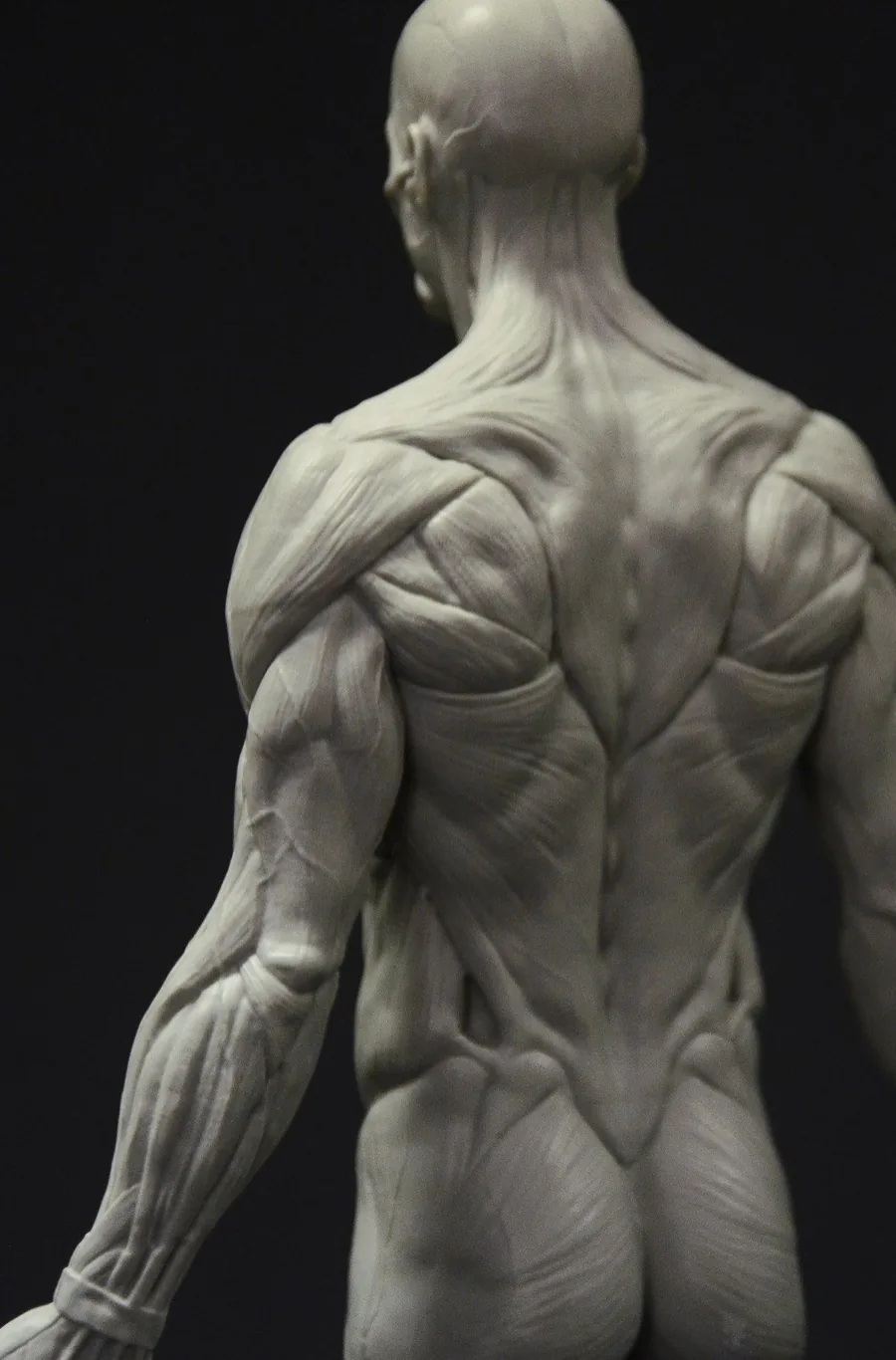
A traditional sculpture is excellent for close observation, but it holds one pose. A rigged 3D écorché lets you place the same anatomy into the gesture you are drawing, orbit around it, change layers, and move the light. That makes it easier to separate a real anatomical change from a change caused only by viewpoint or lighting.
The model should remain a reference, not an automatic answer. Compare it with life and photography so that anatomical clarity supports natural variation.
A simple ten-minute study
Choose one region, such as the shoulder. Draw the surface silhouette, reveal the superficial muscle layer, and draw the large muscle masses. Then isolate one muscle, note its attachments, and return to the complete figure. Repeat the study from a second angle rather than adding more detail to the first drawing.