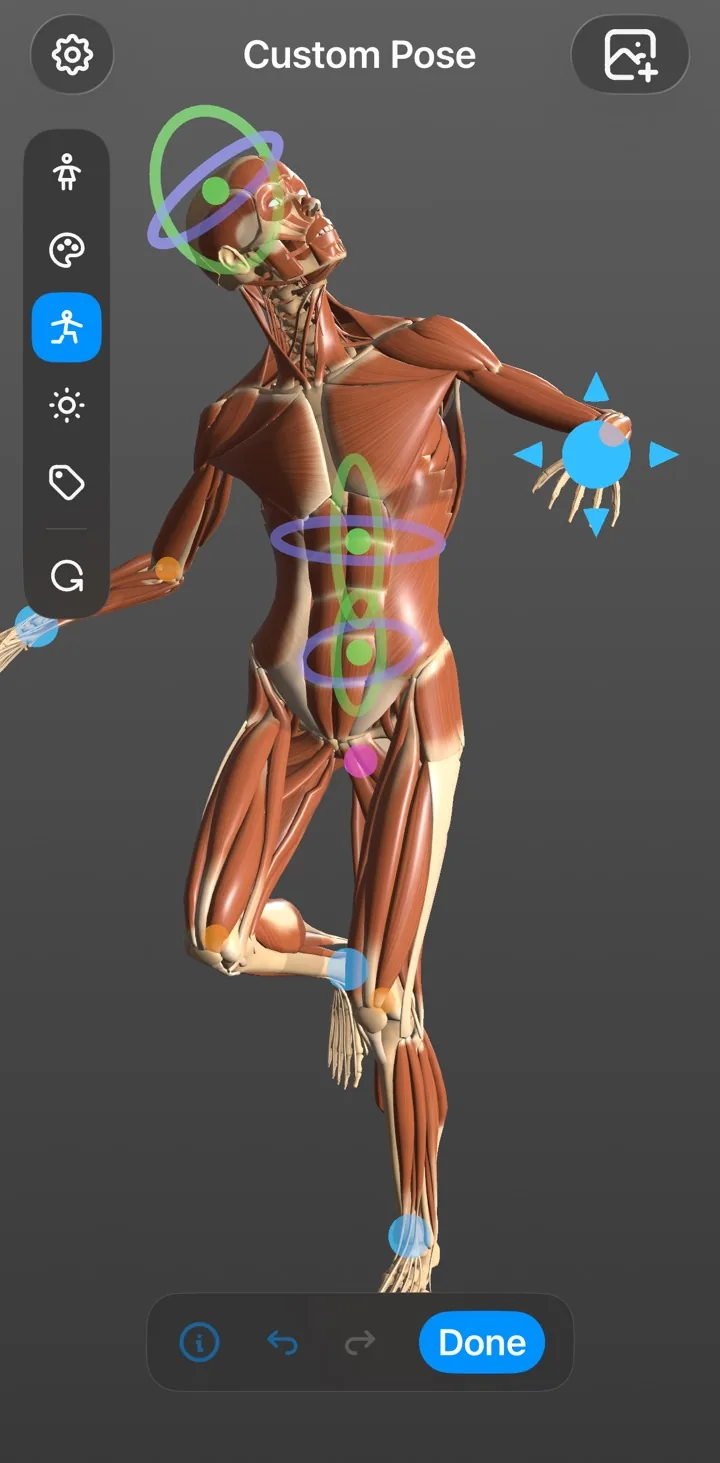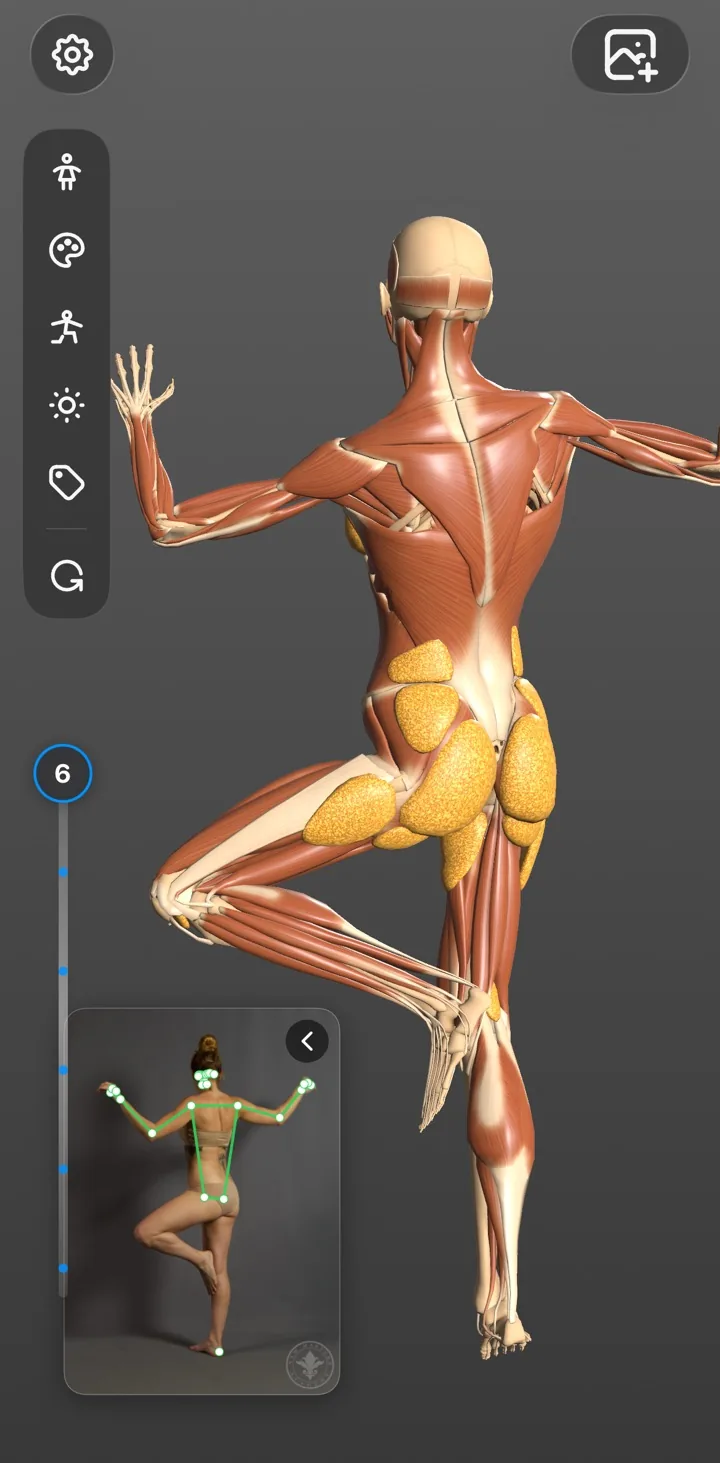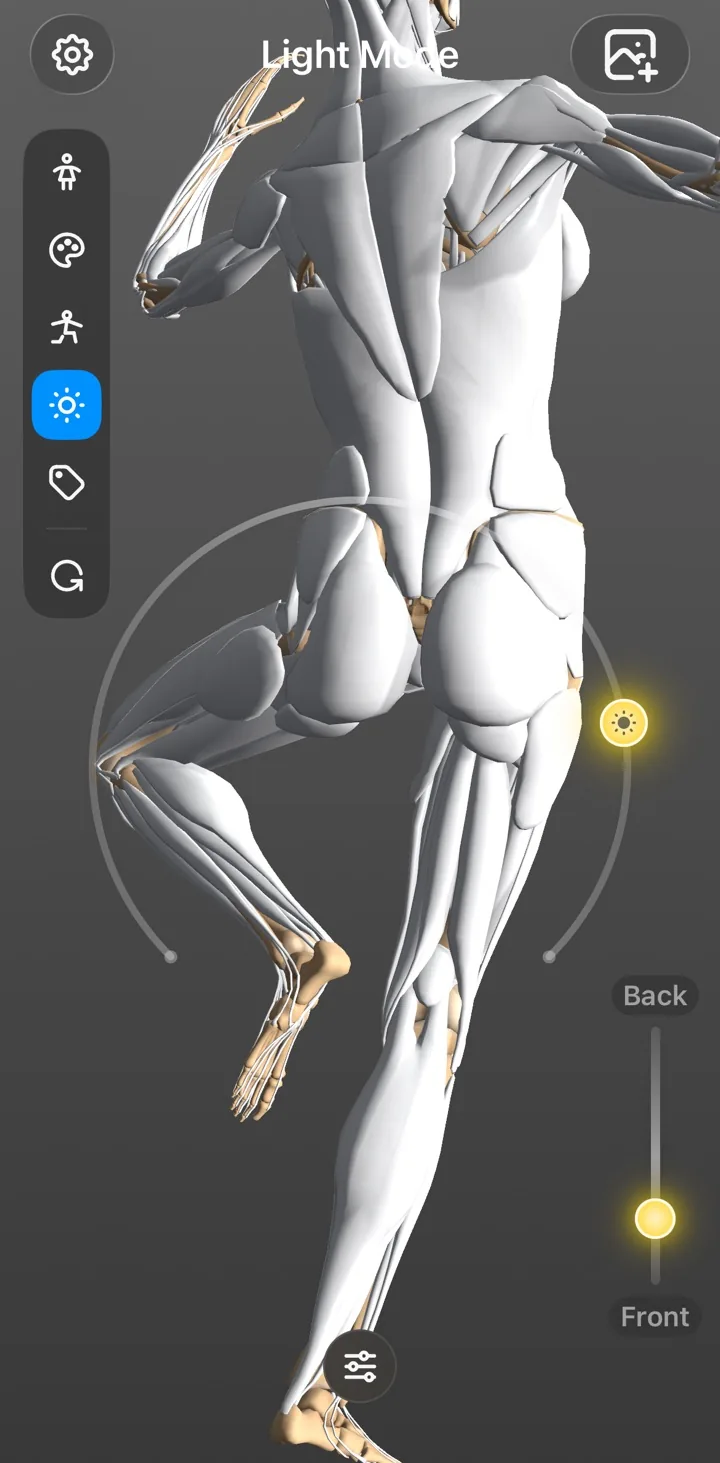
Keep the pose fixed and move one light
Begin with a simple three-quarter pose. Move a single light from front to side and then above the figure. Because the anatomy and camera remain fixed, every change in value comes from the light direction. This makes the turning planes of the rib cage, pelvis, and limbs easier to compare.
Look for large value families first
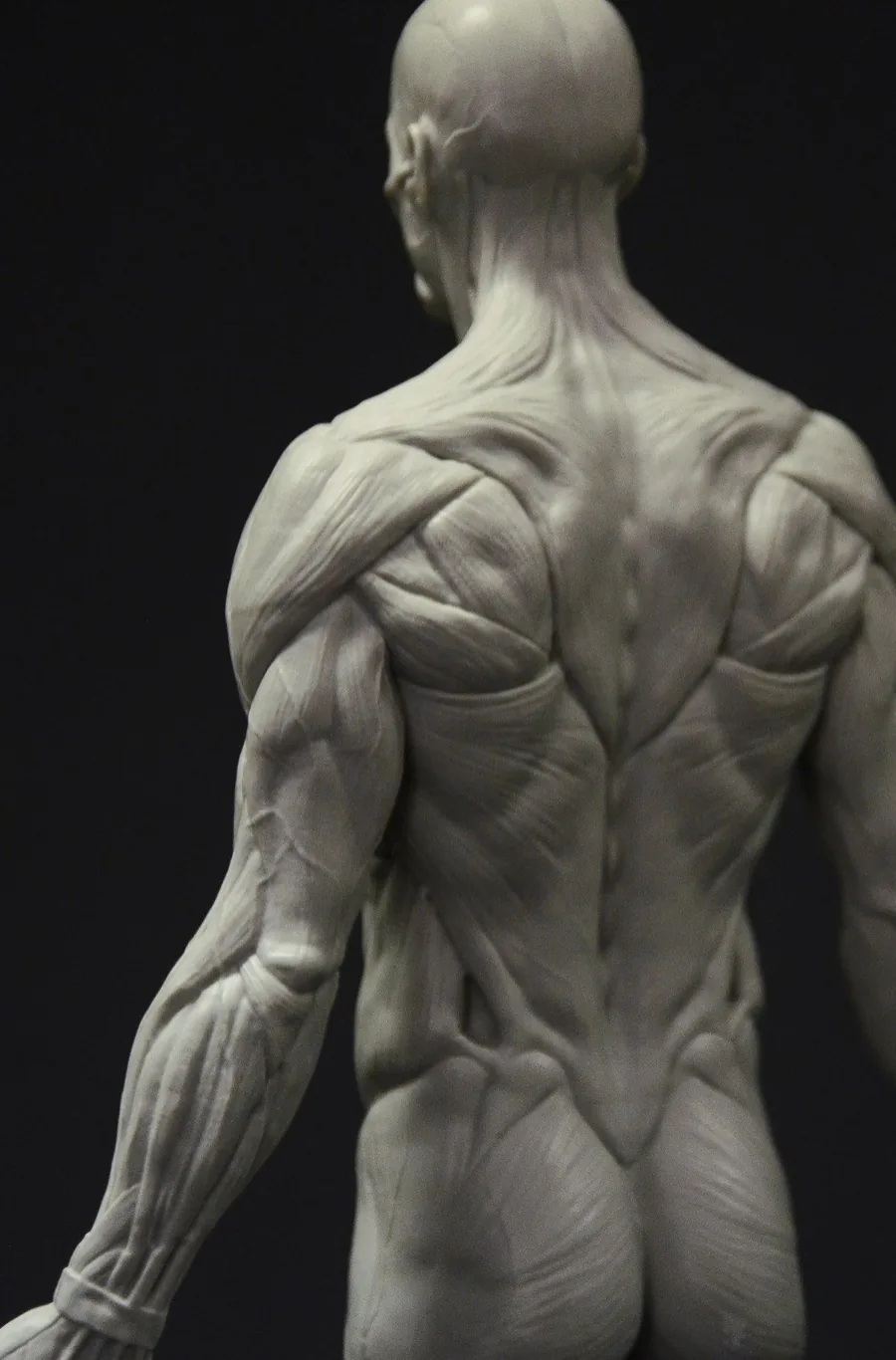
Separate the lit and shadow families before studying small highlights. The terminator—the transition where a form turns away from the light—often describes volume more clearly than the outer contour. Group small anatomical changes when they belong to the same larger plane.
- Front light clarifies local shape but can flatten depth.
- Side light emphasizes turning planes and overlap.
- Top light reveals the shelf-like planes of the shoulders and pelvis.
Distinguish form shadow from cast shadow
Form shadow appears as a surface turns away from the light. Cast shadow is projected when one form blocks light from reaching another. Around the arm, rib cage, and pelvis, comparing the écorché from a second angle helps identify which kind of shadow you are seeing.
Repeat the study on skin and muscle layers
Apply the same light to the muscle layer and then the skin layer. Notice which anatomical divisions remain visible at the surface and which merge into a broader mass. In the final drawing, preserve the large lighting statement and use anatomical accents only where they clarify the pose.